Skip to menu Skip to content

How to find time to exercise with a busy schedule

Tips and tricks October 15, 2026

Between work, family and everyday responsibilities, it isn’t always easy to find time to exercise. But you don’t need to spend hours at the gym to make physical activity part of your daily routine.

According to Emilia Andrieux, kinesiologist and fitness centre and group class coordinator at YMCA du Québec, the key is finding a realistic pace that fits your schedule and your interests. 

She shares her tips on how to exercise regularly, even with a busy schedule.

Find a physical activity you enjoy

Before planning your workouts, take the time to choose activities you genuinely look forward to. 

For Emilia, enjoyment is key to motivation. Choosing exercises only for their effectiveness, without enjoying them, can make your routine hard to stick with. 

Strength training, group classes or cardio: go for what matches your interests, abilities and goals. An activity you enjoy is more likely to find a lasting place in your daily life. 

3 tips for exercising with a busy schedule

1. Spread your workouts across the week


Rather than packing all your physical activity into a single day, Emilia recommends spreading your sessions across the week. 

If your schedule allows, you can plan three one-hour workouts. Otherwise, several sessions of at least 20 minutes are another option. 

What matters most is finding a realistic frequency and sticking to it. If you’re getting back into exercise, focus on consistency first. For the first three months, your goal should be to complete your planned sessions as often as possible, rather than doing too much right from the start. 

2. Choose times that fit your daily life


Working out early in the morning or over your lunch break may work for some people, but not necessarily for you. 

According to Emilia, exercise should fit into your life, not the other way around. 

Identify the times when you have enough time and energy, then add your sessions to your calendar like appointments with yourself. 

Avoid time slots that add stress to your day. Remember to revisit your workout routine as the seasons change: a schedule that works in summer may not suit back-to-school season or the holidays. 

3. Choose short and effective workouts


Only have 20 or 30 minutes? A short and effective workout is possible when it’s well structured. 

Emilia particularly recommends circuit training, which lets you move from one exercise to the next with limited rest. In 30 minutes, this approach works more muscle groups than a workout where exercises are done separately, with rest periods between each set. 

To get the most out of a short workout, Emilia recommends three approaches: 

ApproachesWhy?
Focus on circuit trainingTo link several exercises together and make the most of your session time.
Combine cardio and strength training To work both your cardiovascular and muscular fitness in the same session.
Choose compound exercisesTo work several muscle groups with a single movement, such as squats.

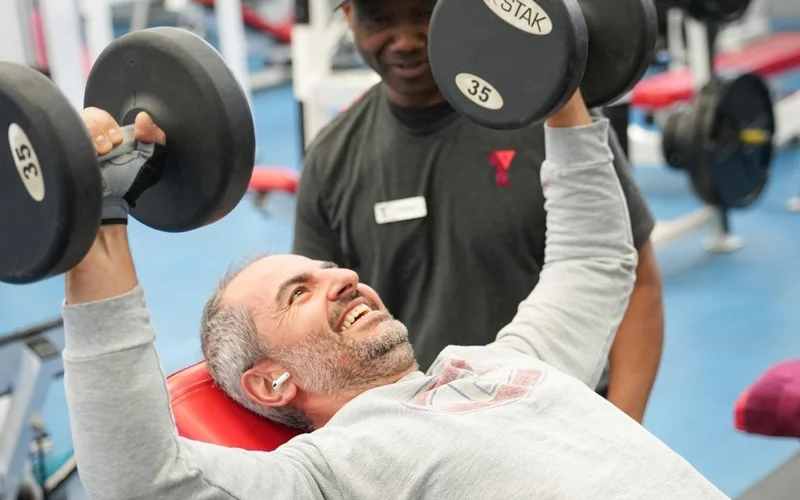
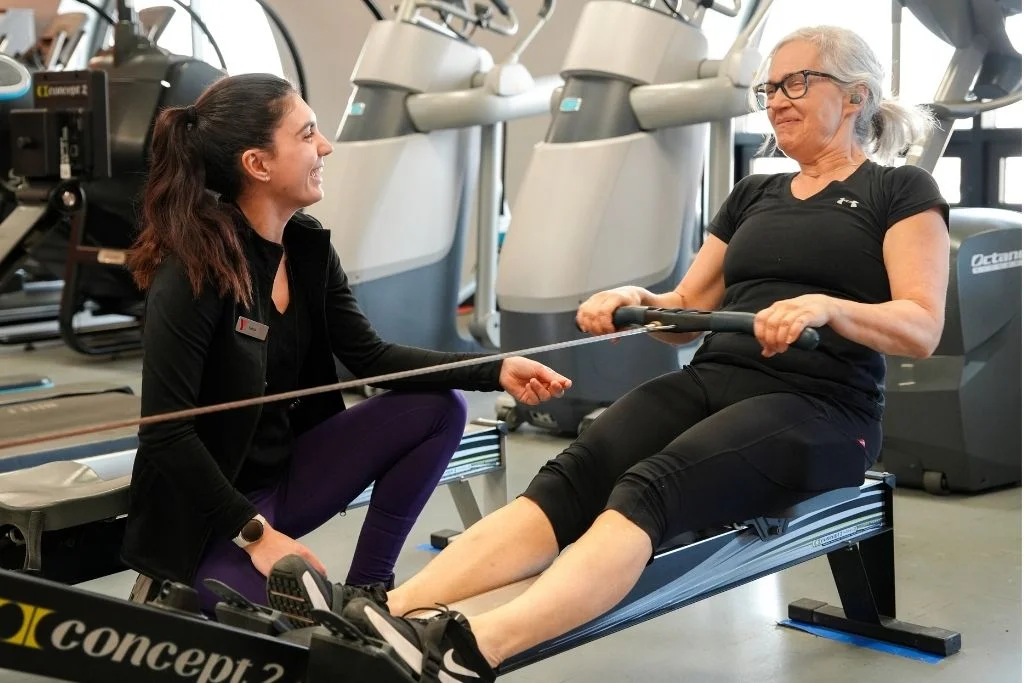
A personal trainer can help you build a personalized workout plan that takes into account your fitness level, your goals and the time you have available.


Circuit training example

To illustrate this approach, Emilia suggests a sample session combining cardio exercises and strength training.

StepExercisesDuration or number of reps 
Warm-upRowing machine5 minutes
Circuit 1Dumbbell shoulder press10 reps
 Dumbbell squat to bench10 reps
 Incline bench dumbbell row10 reps
 Banded glute bridge10 reps
Circuit 2Burpees10 reps
 Dumbbell floor press10 reps
 Dead bug, knees at 90°10 reps
 Dumbbell reverse lunge10 reps

Each circuit consists of four exercises performed over three rounds, with four minutes of exercise and one minute of rest per round. Including the five-minute rowing warm-up, the workout takes approximately 35 minutes.


To go further, find out how to create a workout plan tailored to your needs. 

How to maintain your routine during busy weeks?

Even with good planning, some weeks leave less room for physical activity. At those times, it’s better to adapt your program than to stick to your usual schedule at all costs. 

If you normally work out for an hour, Emilia suggests shortening your session to 20 minutes when your schedule is especially full. 

Also avoid trying to make up for it by cramming all your workouts into a single day or adding extra sessions the following week. 

The goal is to keep a habit that supports your well-being, without adding pressure to your daily life.

Mistakes to avoid when you have no time to exercise

Even with all the motivation in the world, some habits can make it hard to fit physical activity into your daily life. Here are the mistakes Emilia often sees among the people she works with. 

  • Assuming you don’t have time. Before even getting started, some people are convinced their schedule doesn’t leave room for exercise. Rather than ruling out physical activity, start by looking for a format that can realistically fit into your daily life. 

  • Trying to do too much too soon. It’s better to start with a realistic frequency than to pile on workouts and burn out after a few weeks. 

  • Reorganizing your whole life around training. Choosing times that add stress to your day can make your routine hard to maintain. 

  • Focusing only on effectiveness. A program should also make you want to come back. Enjoyment is key to staying motivated. 

  • Packing all your sessions into a single day. Whenever possible, spread your workouts across the week to build consistency. 

Make physical activity a lasting habit

Making physical activity part of your daily life doesn’t mean following a rigid program. It means finding a way to stay active that suits your needs, your interests and your pace of life. 

Whether you want to get back into training, build strength or simply spend more time on your well-being, start with a realistic routine you’ll enjoy keeping up. 

Need support? With personal training, YMCA trainers can help you create a program tailored to your goals and your availability. 


Discover personal training

About our expert Emilia Andrieux

Kinesiologist and fitness centre and group class coordinator at YMCA du Québec


Emilia Andrieux holds a master’s degree in kinesiology from the Université de Montréal. She began her career in personal training at CEPSUM before expanding her experience to teaching group classes, including Bootcamp, TRX and strength training. 

Since joining YMCA du Québec in July 2024, she has combined her physical activity expertise with coordinating the fitness centre and group classes. 

She mainly works with beginners, using a personalized approach focused on enjoyment, consistency and building lasting habits.